As global energy transition accelerates, the "dual carbon" goals have imposed stricter standards on building energy consumption. While green, traditional solar water heating systems have long suffered from the twin frustrations of being "weather-dependent" and "cold by morning" — daytime waste heat goes unused, while nighttime leaves no heat available.
Now, this situation is being completely transformed by a revolutionary technology. When high-efficiency photovoltaics meet phase change materials, we achieve not only a perfect coupling of "light" and "heat," but also bid farewell to the "water tank" era for solar water heaters, ushering in a new age of all-day, instant hot water through high-efficiency energy storage.
Technological Breakthrough: A Qualitative Shift from "Water Storage" to "Energy Storage"
Traditional solar water heaters rely on water tanks for storage — bulky, prone to significant heat loss, and with water temperature dropping sharply as hot water is used. The new system based on phase change materials represents a fundamental change in core logic.
Phase change materials act like "energy sponges," absorbing or releasing large amounts of latent heat during their physical state transition (solid to liquid or vice versa). Research data shows that thermal storage modules using paraffin/expanded graphite composite phase change materials (9:1 mass ratio) have energy storage densities far exceeding that of water, with significantly improved thermal conductivity.
In practical applications, we embed PCM thermal storage cores inside evacuated heat collection tubes or tightly integrate them with the backsheets of PV modules. During the day, the system not only generates electricity from PV panels but also "locks" waste heat into the PCM. Because the phase change process maintains a constant temperature, it effectively solves the intermittency and instability of solar energy — a pain point that has troubled the industry for a century.
PV + PCM: A 1+1>2 Synergistic Effect
The core highlight of this solution lies in the deep coupling of PV/T (photovoltaic-thermal) integration and PCM energy storage.
Active cooling, improving power generation efficiency: PV panel efficiency drops sharply at high temperatures. By attaching PCM tightly to the PV backsheet, the PCM absorbs excess heat generated by the cells and uses it as a preheating source for the hot water system. This not only improves PV power generation efficiency by 5%–10% but also extends module lifespan.
Nighttime heating, achieving all-day operation: Traditional systems suffer severe water temperature loss at night. In contrast, the PCM system stores heat during the day sufficient to continuously heat water after sunset. Experiments show that PCM energy storage systems can reduce nighttime temperature drop from 4.5°C to as low as 1.4°C or even lower, ensuring comfortable water temperatures for morning washing.
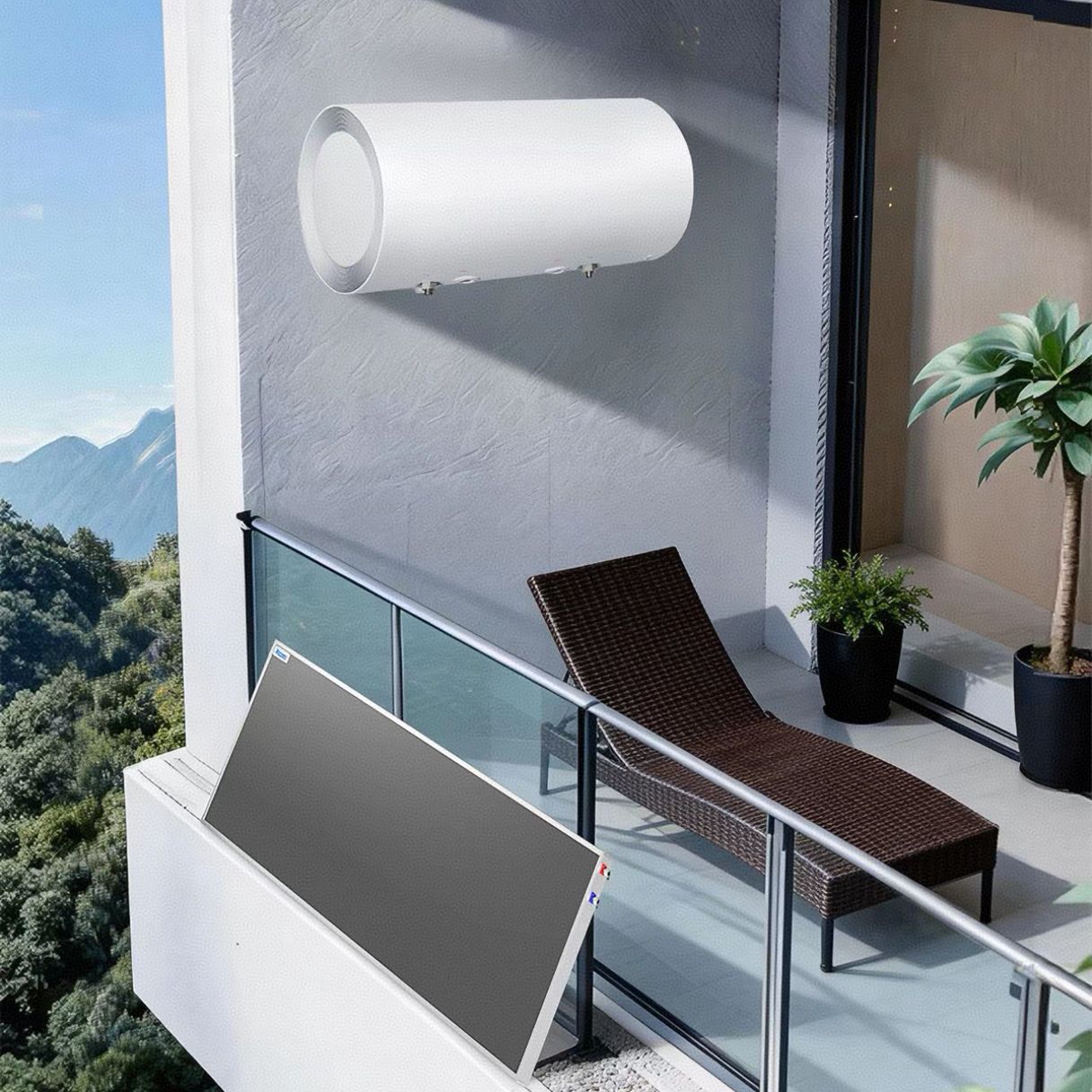
Ultra-compact design, enhancing architectural aesthetics: Thanks to the high heat storage capacity of PCM, we can even eliminate bulky water tanks. This "tankless" design allows heat collectors to blend seamlessly with building facades, reducing load-bearing requirements while turning solar equipment into a stylish "garment" for modern architecture.
Core Scenarios: Who Is Paying for This Technology?
This technology has already moved beyond laboratory data (with relevant model validation deviation rates below 5%) into large-scale commercial implementation.
High-end residences and villas: Solving pain points of traditional solar water heaters — unstable water temperatures, winter pipe freezing, and unsightly rooftop tanks. Provides an "instant hot water" central heating experience, and combined with PV power generation, brings hot water energy consumption close to "zero."
Hotels and medical facilities: These places have extremely high requirements for hot water stability and hygiene. PCM energy storage systems can integrate "off-peak electricity thermal storage" strategies — storing heat when electricity prices are low and releasing it during peak hours. Combined with on-site PV generation, this can reduce operating costs by over 60%.
High-altitude and remote areas: In -20°C or even lower environments, traditional heat pumps or solar systems often fail. With their high stability and efficient heat collection design, PCM materials can still stably output hot water above 45°C in high-altitude regions such as Tibet and Qinghai, ensuring quality of life for pastoralist settlements or border outposts.
Future Outlook: The "Energy Heart" of Zero-Carbon Buildings
We believe that buildings of the future will no longer be merely energy-consuming entities, but rather "production-storage integrated" energy systems. Phase change materials are precisely the "golden key" connecting distributed PV with end-use heating demand.
Choosing a PV water heating system equipped with PCM energy storage technology is not just selecting a piece of equipment — it is choosing a stable, efficient, and future-proof zero-carbon energy solution.


 琼公网安备46902302000892号